
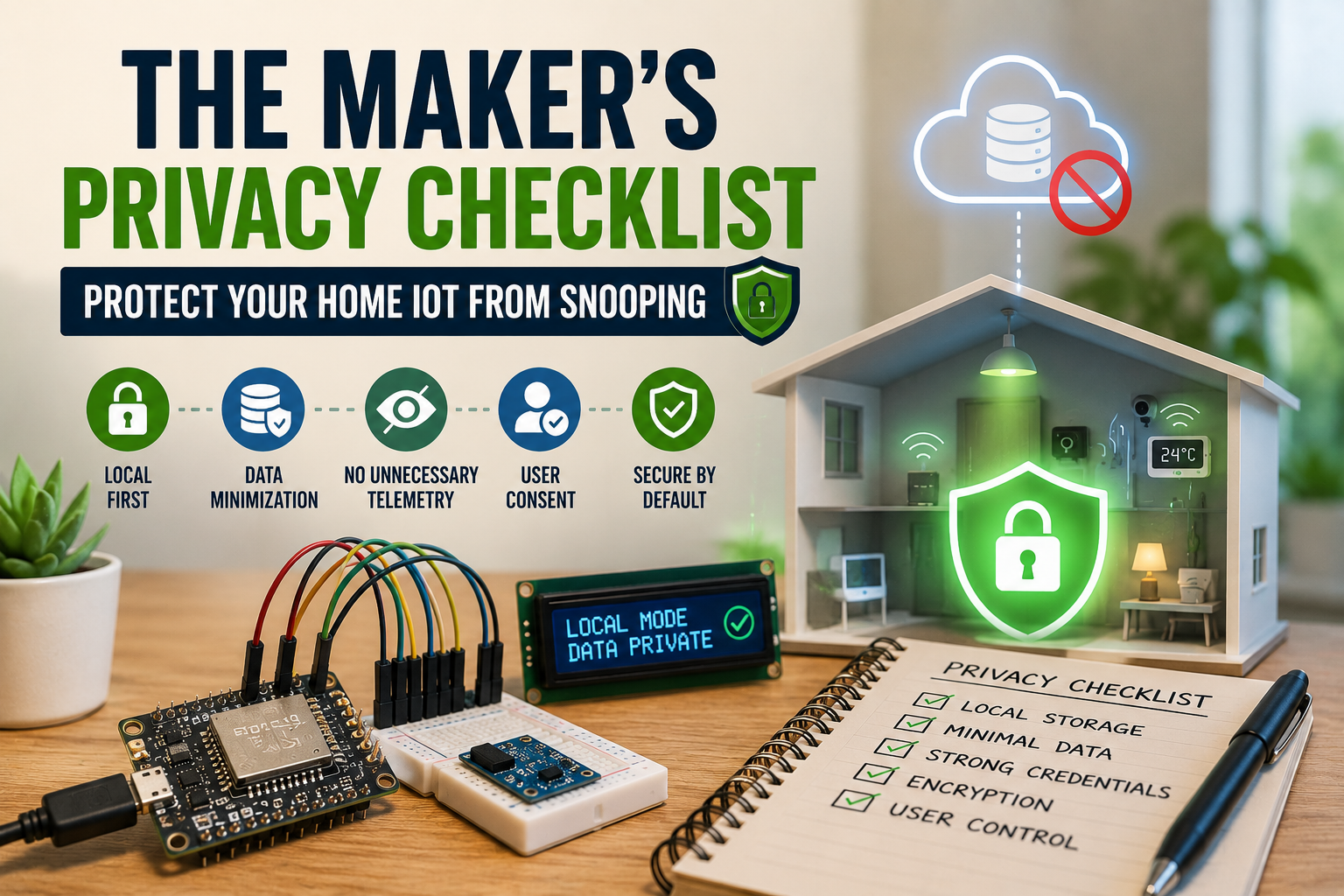
Building a smart home project is easier than ever. Whether it’s an ESP32 weather station, an Arduino door sensor, or a Raspberry Pi security camera, connected devices bring convenience and automation to everyday life.
But every connected device also collects data. Without careful planning, even a simple DIY project can expose personal information, reveal daily routines, or become an entry point into your home network.
The good news is that improving privacy doesn’t require expensive hardware or advanced cybersecurity knowledge. By following a few practical design principles, makers can build devices that collect only the information they truly need, store it securely, and give users greater control over their own data.

Privacy Starts Before You Write the First Line of Code
Privacy isn’t something you add after building an IoT device—it’s a design choice made from the very beginning. Before connecting sensors or enabling Wi-Fi, consider what information the device truly needs to collect. Every additional data point increases the amount of information that must be protected.
A simple question can guide every project:
“If this data were exposed, would it matter?”
If the answer is yes, think carefully about whether the device needs to collect it at all.
The Maker’s Privacy Checklist
Instead of trying to secure everything at once, work through a practical checklist as your project develops.
✔ Collect Only What You Need
Avoid gathering information that serves no clear purpose.
Examples include:
- Store temperature instead of exact location.
- Save events instead of continuous recordings.
- Record averages instead of every measurement.
Less data means less risk.
✔ Keep Data Local Whenever Possible
Many IoT projects never need cloud storage.
Running locally offers several advantages:
- Better privacy
- Faster response times
- Offline operation
- Lower bandwidth usage
- Greater user control
If the device works without the internet, consider keeping it that way.
Local-First Design Is Becoming the Better Choice
Many DIY IoT projects automatically send data to cloud services because it’s convenient. However, not every smart device benefits from constant internet connectivity. A temperature sensor, plant monitor, or home automation controller can often process and store information locally without sacrificing functionality.
Keeping data on the device offers several advantages. It reduces internet dependency, improves response times, and gives users greater control over their information. Cloud services still have their place, especially when remote access is required, but local-first design should be the default whenever possible.
When Cloud Storage Actually Makes Sense
Cloud platforms aren’t the enemy—they simply need to be used wisely. If you want to monitor your home while traveling or receive alerts from a remote location, cloud connectivity provides obvious benefits.
The goal isn’t to eliminate cloud services but to upload only the information that’s necessary while keeping sensitive or personal data on the device whenever possible.
Local Storage or Cloud?
Not every project needs the same approach.
| Local Storage | Cloud Storage |
|---|---|
| Better privacy | Easy remote access |
| Works offline | Accessible anywhere |
| Full user control | Automatic backups |
| Lower ongoing costs | Simple multi-device sync |
Many makers choose a hybrid approach—keeping sensitive data locally while uploading only essential information when remote access is needed.
Less Data Means Better Privacy
One of the easiest ways to improve privacy is surprisingly simple—collect less information. Many projects gather data simply because they can, not because they need it.
Instead of recording every sensor value or user action, store only the information required for the device to perform its job. Smaller datasets are easier to protect, consume less storage, and reduce the impact of any future security issue.
Reduce Telemetry, Increase Trust
Telemetry helps developers understand how devices perform, but excessive reporting can reveal far more than intended.
Good privacy-focused devices send only information that improves functionality.
Instead of transmitting every button press or sensor update, consider sending only:
- Error reports
- Battery status
- Firmware version
- Critical alerts
Reducing telemetry protects users while conserving bandwidth and power.
Anonymous Data Is Often Enough
Many applications don’t require personal information.
For example:
Instead of storing:
John opened the garage at 7:12 PM
Store:
Garage door opened successfully
Removing names, locations, and personal identifiers makes data significantly less sensitive while still allowing the device to perform its intended function.
Ask Before You Collect
Users should always understand what information a device stores or transmits.
Simple privacy-friendly habits include:
- Clear setup instructions
- Optional cloud features
- Easy privacy settings
- Visible recording indicators
- Straightforward data deletion
Giving users control builds confidence and encourages responsible IoT design.
Small Design Choices Build User Trust
Users are far more likely to trust a device when they understand what it does with their data. Simple indicators, clear privacy settings, and straightforward explanations create confidence without adding unnecessary complexity.
Giving users control over what is collected and stored also makes devices feel more transparent. Even small features, such as an option to clear stored data or disable cloud synchronization, demonstrate that privacy was considered during development rather than added as an afterthought.
Quick Privacy Wins for Arduino and ESP Projects
Many beginner projects can become more secure with just a few small changes.
A good starting checklist includes:
- Change default usernames and passwords.
- Disable unused UART debug output.
- Remove unnecessary serial logging.
- Secure Wi-Fi credentials.
- Keep firmware updated.
- Disable unused services.
- Store secrets outside source code.
- Turn off development features before deployment.
These changes take only minutes but significantly improve device privacy.
Protect Wi-Fi Credentials
Hard-coded usernames and passwords are one of the most common mistakes in DIY IoT projects.
Better approaches include:
- Secure configuration pages
- Encrypted credential storage
- Device provisioning
- Temporary setup mode
Protecting network credentials also protects every other device connected to the same network.
Think About Physical Access Too
Privacy isn’t only about software.
If someone can physically access a device, they may retrieve stored credentials or sensitive information.
Simple hardware protections include:
- Lockable enclosures
- Hidden debug connectors
- Disabled programming ports
- Secure mounting
- Tamper-resistant cases
Physical security is often overlooked in hobby projects but becomes increasingly important for permanent installations.
Privacy by Default Is Better Than Privacy by Option
The safest settings should be enabled automatically.
Instead of asking users to disable unnecessary features later, design devices that begin with the minimum required permissions.
Good default behavior includes:
- Local processing first
- Minimal logging
- No unnecessary cloud uploads
- Secure passwords
- Encrypted communication
Users can always enable additional features if needed.
Common Privacy Mistakes Makers Should Avoid
Even experienced developers occasionally overlook basic privacy practices.
Some of the most common mistakes include:
- Using default passwords
- Exposing debug interfaces
- Uploading unnecessary sensor data
- Leaving APIs unsecured
- Storing credentials in plain text
- Logging sensitive information
- Ignoring firmware updates
- Giving every user administrator access
Avoiding these habits makes IoT devices significantly more trustworthy.
A Simple Privacy Scorecard
Before deploying your next project, ask yourself these questions:
✔ Does the device only collect necessary data?
✔ Can it function without cloud services?
✔ Are default passwords changed?
✔ Is sensitive information encrypted?
✔ Can users delete their own data?
✔ Are unused interfaces disabled?
✔ Is firmware kept up to date?
If you answered “No” to any of these, your project still has room for improvement.
Why Privacy Makes Better Products
Privacy isn’t just about preventing data leaks—it’s about designing technology that respects its users. Devices that collect less information, process more data locally, and give people greater control are often faster, simpler, and easier to trust. Whether you’re building a personal Arduino project or developing a connected product for others, privacy-focused design creates solutions that users are more comfortable bringing into their homes.
Conclusion
Every connected device introduces new privacy considerations, but protecting user data doesn’t have to be complicated. By following simple practices such as collecting only essential information, minimizing telemetry, storing data locally whenever possible, securing credentials, and disabling unnecessary interfaces, makers can build IoT projects that are both functional and respectful of user privacy. Small design decisions made early in development often have the greatest impact, resulting in smarter devices that people can use with greater confidence and peace of mind.