
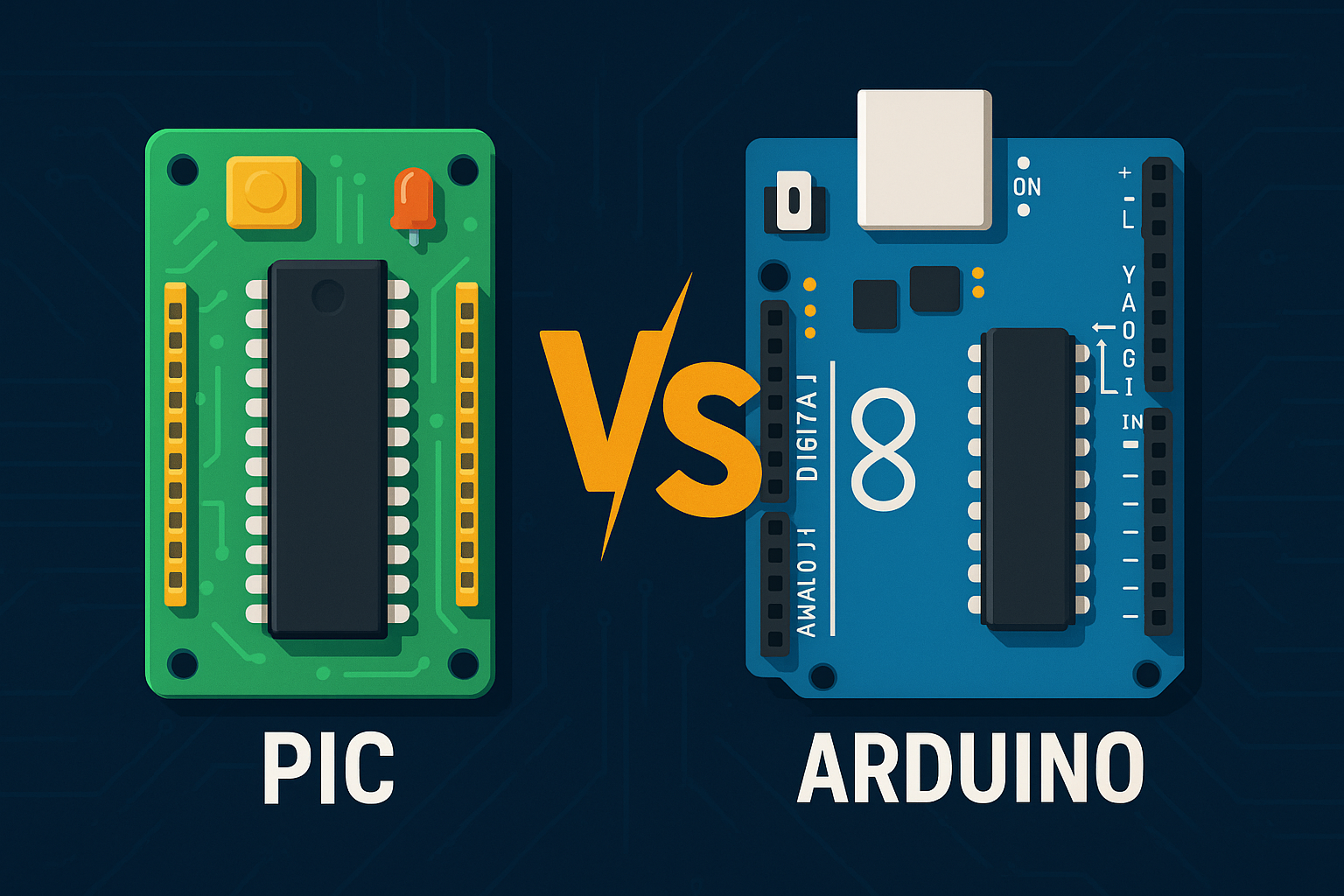

In the world of electronics, the choice of microcontroller can make or break your project. Two titans in this realm are PIC microcontrollers and Arduino boards. Each has its unique strengths, features, and dedicated communities. Whether you’re a hobbyist tinkering in your garage or a professional engineer working on cutting-edge technology, understanding these platforms is crucial. With countless options available, knowing which microcontroller fits your needs can set the stage for success.
PIC microcontrollers have long been revered for their reliability and performance in industrial applications. They excel in tasks requiring precision and efficiency. On the other hand, Arduino boards have captured the hearts of makers and educators with their user-friendly design and vast ecosystem. Choosing the right one for your project can not only enhance functionality but also streamline development processes. Are you ready to dive deeper into the strengths and weaknesses of these two platforms? Let’s explore how they stack up against each other and discover which one truly reigns supreme!
Understanding PIC Microcontrollers
PIC microcontrollers, developed by Microchip Technology, are known for their versatility and robust performance in various applications. These microcontrollers come with a range of key features including multiple I/O ports, built-in timers, and programmable memory options, allowing developers to tailor their projects with precision. The architecture of PIC microcontrollers varies from simple 8-bit models to more advanced 32-bit systems, which makes them suitable for everything from basic hobbyist projects to complex industrial applications. Their ability to operate at low voltages while maintaining high efficiency is another reason they stand out in the crowded microcontroller market.
One of the primary advantages of using PIC microcontrollers is their reliability in real-time applications. They are particularly favored in scenarios that require consistent timing and control, such as automotive systems, where PICs can manage engine timing or sensor data processing with impressive accuracy. Furthermore, their extensive array of peripherals—such as analog-to-digital converters (ADCs), serial communication interfaces, and PWM outputs—enables engineers to implement sophisticated control mechanisms without needing additional components. This simplicity helps reduce project costs while improving overall performance.
Industries ranging from consumer electronics to medical devices heavily rely on PIC technology. For instance, in the medical field, PIC microcontrollers are often used in portable diagnostic equipment due to their compact size and power efficiency. Additionally, in home automation systems, they manage tasks like lighting control and environmental monitoring, showcasing their adaptability. The widespread use of PIC microcontrollers across various sectors underscores their importance in modern electronics and provides a solid foundation for both beginners and seasoned professionals looking to create reliable and efficient systems.
In summary, when considering a microcontroller comparison between PIC and others like Arduino, it’s essential to recognize the specific features and advantages that PIC microcontrollers bring to the table. Their versatility, reliability, and extensive industry applications make them a compelling choice for many electronic projects, whether simple or complex.
Exploring Arduino Boards
Arduino has become synonymous with accessible microcontroller technology, largely due to its diverse range of models that cater to various project needs. From the compact Arduino Nano, ideal for space-constrained projects, to the robust Arduino Mega, which offers more input/output pins and memory for complex applications, there’s an Arduino board for almost every requirement. Each model comes with distinct features such as built-in Wi-Fi capabilities in the Arduino Uno WiFi, making it perfect for IoT projects, while the Arduino Leonardo integrates USB functionality directly into its design, allowing for unique applications like keyboard emulation.
One of the standout benefits of Arduino is its user-friendly approach, particularly for beginners. The extensive community support ensures that newcomers can find tutorials, sample codes, and troubleshooting tips with ease. This lowers the barrier to entry, allowing hobbyists to quickly grasp programming concepts and hardware interfacing. For advanced users, Arduino’s versatility enables them to push the limits of their projects, leveraging features such as analog inputs and PWM outputs to create sophisticated systems. Whether you’re building a simple LED blink circuit or a complex robotics project, Arduino’s ecosystem supports a broad range of project suitability.
Popular projects that utilize Arduino platforms showcase the creativity and innovation of the maker community. For instance, aspiring programmers often start with simple tasks like temperature monitoring using a DHT sensor, which not only demonstrates basic coding principles but also introduces the use of sensors in real-world applications. More experienced developers might undertake projects like home automation systems or even custom drones, utilizing Arduino boards’ compatibility with various shields and modules to expand their functionalities. The open-source nature of Arduino encourages project sharing, inspiring others to replicate or enhance existing designs.
Ultimately, Arduino stands out not just as a microcontroller platform but as a vibrant community that fosters learning and experimentation. Its wide array of models and extensive resources make it an appealing choice for both novices and seasoned professionals alike. Whether you are looking to start a new hobby or develop an advanced technical project, exploring the potential of Arduino boards can provide invaluable insights and opportunities in the world of electronics.
Performance Comparison
When it comes to processing power and speed, PIC microcontrollers and Arduino boards present distinct advantages that cater to different project needs. PIC microcontrollers, known for their efficiency and optimized architecture, often operate at higher clock speeds and can handle complex tasks with ease. For instance, a PIC16F877A can achieve a clock speed of up to 20 MHz, making it suitable for applications requiring real-time data processing, such as motor control or sensor interfacing. On the other hand, Arduino boards, like the popular Arduino Uno, typically feature ATmega328P microcontrollers with a maximum clock speed of 16 MHz. While this is sufficient for many hobbyist projects, those needing higher performance might find themselves limited.
Power consumption is another critical aspect where these two platforms differ significantly. PIC microcontrollers are designed for low-power operation, which is ideal for battery-powered applications. Many PIC models can run in sleep mode, consuming mere microamperes of current while maintaining their state, allowing for extended battery life in devices such as remote sensors or portable gadgets. In contrast, while Arduino boards are relatively efficient, they generally consume more power due to their additional features and integrated components like USB interfaces. This difference can be pivotal when designing projects where power efficiency is paramount.
Real-time performance is essential in applications that demand immediate response times, such as robotics or automation systems. PIC microcontrollers excel here, thanks to their ability to manage interrupts effectively and execute tasks with minimal latency. For example, a project involving real-time data acquisition from multiple sensors can benefit from the rapid processing capabilities of a PIC microcontroller, ensuring timely responses to changing conditions. Conversely, Arduino boards may introduce slight delays due to the overhead of their programming environment and libraries, which can be a limitation for applications requiring stringent timing accuracy.
In summary, the choice between PIC microcontrollers and Arduino boards boils down to the specific performance requirements of your project. Whether you prioritize raw processing power, energy efficiency, or real-time responsiveness will dictate which platform best suits your needs. As you delve deeper into your project planning, considering these performance factors will help ensure you select the right tool for the job.
Programming and Development Environment
When it comes to programming, PIC microcontrollers and Arduino boards offer distinct approaches that cater to different user needs. PIC microcontrollers primarily utilize assembly language or C, giving developers granular control over hardware features. This low-level programming can be beneficial for optimizing performance and resource management, especially in applications requiring real-time processing or minimal power consumption. However, this complexity can also pose a steep learning curve for beginners who may feel overwhelmed by the intricacies of hardware manipulation.
In contrast, Arduino simplifies the programming experience with its Arduino Integrated Development Environment (IDE), which supports a simplified version of C/C++. The platform’s syntax is designed to be user-friendly, making it accessible for novices while still powerful enough for experienced developers. The Arduino IDE also comes with a rich library ecosystem that allows users to easily interface with various sensors and modules, further enhancing project capabilities without delving deep into hardware specifics. For instance, a beginner can quickly set up an LED blinking project with just a few lines of code, whereas achieving the same on a PIC may involve more intricate setup and understanding of the underlying hardware features.
Development tools also play a crucial role in the ease of use for both platforms. For PIC microcontrollers, Microchip provides MPLAB X IDE, which is feature-rich but may require a bit of familiarity with debugging and simulation tools. On the other hand, the Arduino IDE is lightweight and straightforward, boasting a vibrant community that continually contributes libraries and tutorials. This community-driven support is invaluable, as it means that even those with minimal experience can find guidance through forums, blogs, and project showcases.
Ultimately, the choice between PIC and Arduino in terms of programming environment often boils down to the user’s skill level and project requirements. Beginners might gravitate toward Arduino due to its ease of use and extensive community support, while seasoned developers may prefer PIC for its robust capabilities and control over hardware features. Regardless of the platform chosen, both offer unique advantages that can lead to successful project outcomes, whether you’re crafting a simple prototype or developing complex embedded systems.
Community and Support Resources
When it comes to choosing between PIC microcontrollers and Arduino boards, the community and support resources available for each platform can significantly influence your decision. Both ecosystems offer a wealth of online resources, documentation, and forums that cater to users ranging from beginners to seasoned professionals. For instance, the Arduino community is particularly vibrant, with countless tutorials, project ideas, and troubleshooting advice available through its official website and various forums like Arduino Stack Exchange. This extensive support network fosters an environment where hobbyists can easily learn from one another, share their projects, and collaborate on innovative ideas.
In contrast, while the PIC microcontroller community may not be as large or as visible as Arduino’s, it still boasts a dedicated user base. Microchip Technology, the manufacturer of PIC devices, provides comprehensive documentation and resources on its website, including datasheets, application notes, and development guides. Additionally, platforms like the Microchip Developer Help forum allow users to engage directly with experts and fellow enthusiasts. This can be invaluable for those working on complex projects or seeking specific technical assistance.
Both platforms also offer opportunities for community engagement and project sharing. Arduino users frequently showcase their work on platforms like Instructables or GitHub, where they can find inspiration and build upon existing projects. The open-source nature of Arduino encourages creativity and collaboration, making it easy for anyone to contribute. On the other hand, PIC users might find themselves engaging in more specialized forums or user groups that focus on specific applications within industries such as automotive or medical devices. This distinction highlights how each platform caters to different types of users and project requirements.
Ultimately, the level of manufacturer support and third-party resources can also play a crucial role in your choice. While Arduino has an active ecosystem of third-party libraries and shields that enhance its usability, PIC microcontrollers benefit from strong backing by Microchip Technology, which continuously invests in updating their development environments and tools. This includes MPLAB X IDE for PIC programming, which provides a robust environment for developers. Both platforms offer unique advantages; thus, understanding the community dynamics around them can guide you towards the right choice for your specific needs.
Cost Analysis
When it comes to selecting between PIC microcontrollers and Arduino boards, cost is often a significant factor for hobbyists and professionals alike. On the surface, Arduino boards are generally priced in a more approachable range, with many entry-level models available for around $20 or less. In contrast, while basic PIC microcontrollers can be found for a similar price, the overall cost can escalate depending on the specific model and features required for a given project. For example, advanced PIC devices with higher processing power or additional functionalities may reach prices upwards of $50 or more, making them less accessible for casual users.
However, the initial purchase price is just one aspect of the financial equation. Both platforms may incur hidden costs that can catch unwary users off guard. For instance, while Arduino boards often come with built-in USB interfaces that facilitate easy programming and connection to computers, PIC microcontrollers typically require additional components, such as programmers or development boards, to get started. This means that hobbyists might find themselves spending extra money on essential accessories to fully utilize their PIC microcontroller projects. Additionally, depending on the complexity of the project, users may need to invest in various sensors, shields, or other hardware that can significantly add to the overall budget.
For hobbyists working on small-scale projects, Arduino’s lower entry costs and abundant community support can make it an attractive option. Many beginners appreciate the extensive libraries and examples available online, which can reduce development time and save money in the long run. On the other hand, professionals aiming for more robust applications may find that investing in PIC technology pays off due to its reliability and performance capabilities. While the upfront costs may be higher, the long-term benefits—such as reduced power consumption and enhanced processing speed—can justify the investment for commercial applications.
Ultimately, when evaluating cost considerations, it’s essential to weigh not only the initial expenses but also any potential long-term savings or additional costs associated with each platform. Whether you’re a hobbyist looking to tinker on a budget or a professional engineer seeking high-performance solutions, understanding these financial factors will help you make an informed decision about which microcontroller best suits your needs and goals.
Ideal Use Cases for Each Platform
When it comes to selecting the right microcontroller for a project, understanding the ideal use cases for both PIC microcontrollers and Arduino boards is crucial. PIC microcontrollers are often favored in applications that require reliable performance under strict conditions, such as automotive systems, industrial automation, and medical devices. Their ability to handle complex tasks with low power consumption makes them perfect for embedded systems where efficiency is paramount. For instance, a PIC microcontroller could be the backbone of a temperature control system in a refrigeration unit, providing precise readings and maintaining optimal conditions without draining the power supply.
On the other hand, Arduino excels in educational settings and rapid prototyping due to its user-friendly design and extensive community support. Projects like DIY home automation systems or interactive art installations benefit from Arduino’s plug-and-play capabilities. Its vast library of code snippets and shields allows hobbyists to easily integrate various sensors and modules, making it an excellent choice for beginners looking to experiment without deep technical knowledge. For example, an Arduino board can quickly be set up to control LED lights based on user input, providing immediate visual feedback and enhancing learning experiences.
When deciding between the two platforms, several factors should be considered. The complexity of the project is a significant determinant; if you’re working on a straightforward task requiring minimal resources, Arduino’s simplicity may be the way to go. Conversely, if your project demands precise timing and extensive data processing, PIC microcontrollers may offer the necessary performance and cost-effectiveness. Additionally, consider the long-term scalability of your project: while Arduino is great for initial prototypes, PIC may provide a more robust solution as your project evolves into a commercial product.
Ultimately, the choice between PIC and Arduino will largely depend on your specific needs, budget, and level of expertise. By evaluating the strengths of each platform in relation to your project requirements, you can make an informed decision that aligns with your goals—whether that’s diving into complex embedded systems or embarking on an exciting maker journey.
Future Trends in Microcontroller Technology
As technology continues to advance, the landscape of microcontroller development is experiencing a significant transformation. One of the most exciting emerging technologies is the integration of artificial intelligence (AI) and machine learning capabilities directly into microcontrollers. This evolution allows for smarter devices that can learn from user interactions and make decisions without constant human input. For instance, imagine an Arduino-powered smart home system that not only responds to commands but also anticipates your needs based on past behavior—this level of sophistication is becoming increasingly attainable.

The hobbyist electronics scene is also evolving rapidly, with a growing emphasis on ease of use. Platforms like Arduino have already made strides in simplifying the development process for beginners, but future trends are likely to push this envelope even further. User-friendly interfaces, drag-and-drop programming environments, and enhanced documentation will empower more people to engage in electronics projects without a steep learning curve. As more individuals enter the field, we can expect a surge in collaborative projects and innovative ideas, creating a vibrant community that shares knowledge and resources.
In terms of professional applications, industries such as IoT (Internet of Things) are set to benefit immensely from advancements in microcontroller technology. Companies are increasingly leveraging low-power microcontrollers that can communicate seamlessly with one another, forming networks that can manage everything from smart cities to industrial automation. This shift will not only enhance efficiency but also open new avenues for creativity and innovation across sectors.
Looking ahead, both PIC and Arduino are likely to continue their respective journeys, each carving out niches within the broader microcontroller market. While PIC may focus on high-performance applications requiring robust processing power, Arduino could further solidify its position as the go-to platform for accessibility and ease of use among hobbyists and educators. As technology advances, the competition between these two platforms will drive improvements that benefit users at all levels, making it an exciting time for anyone interested in microcontrollers.
Final Thoughts on Choosing Your Microcontroller
In this article, we’ve explored the strengths and weaknesses of both PIC microcontrollers and Arduino boards. PIC microcontrollers shine in terms of power efficiency and real-time performance, making them ideal for specific applications. On the other hand, Arduino boards offer a user-friendly experience, especially for beginners, and boast a vibrant community that supports diverse projects.
Ultimately, the right choice depends on your specific needs and project goals. Whether you’re an experienced engineer or a hobbyist just starting, both platforms have something to offer. We encourage you to experiment with both PIC and Arduino. Each has unique advantages that can enrich your electronics journey and inspire innovative creations. Happy tinkering!