
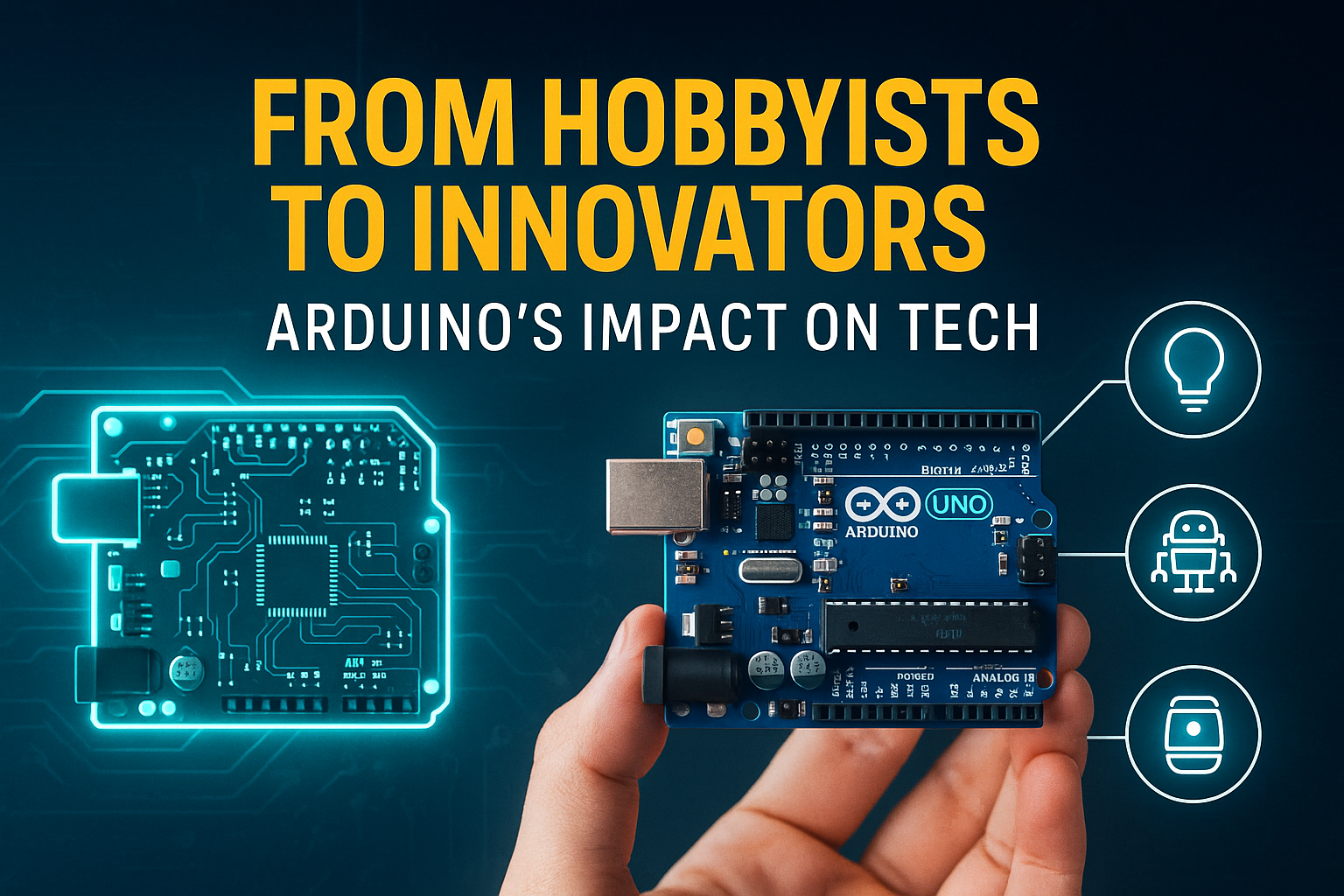

In a world where technology evolves at lightning speed, Arduino stands out as a beacon of innovation. This open-source platform has transformed the way we think about electronics and programming. What began as a simple tool for hobbyists has grown into a powerful catalyst for creativity and problem-solving. From DIY projects in basements to groundbreaking startups, Arduino has paved the way for anyone with a vision to bring their ideas to life.
The beauty of Arduino lies in its accessibility. It empowers individuals—from curious students to seasoned engineers—to experiment, iterate, and innovate without the barriers traditionally associated with tech development. Today, we see a remarkable shift: hobbyist projects are no longer just personal endeavors; they have become the foundation for innovative solutions that can disrupt entire industries. Join us as we explore how Arduino has inspired a new generation of creators and entrepreneurs, turning dreams into reality one project at a time.
What is Arduino?
Arduino is an open-source electronics platform that has revolutionized the way we approach prototyping and DIY projects. At its core, Arduino consists of a simple microcontroller board, complemented by an integrated development environment (IDE) that allows users to write and upload code to the board. The beauty of Arduino lies in its modular components, which include sensors, motors, displays, and various other add-ons known as shields. This versatility enables users to create a wide array of applications, from basic LED blinkers to sophisticated robotics systems, all powered by the same user-friendly framework.
One of the most appealing aspects of Arduino is its accessibility. Designed with both beginners and seasoned experts in mind, the platform offers a gentle learning curve while still providing the depth needed for advanced projects. For novices, the extensive library of tutorials and community support makes it easy to start building and experimenting. In fact, many users find themselves creating their first project within just a few hours of picking up an Arduino kit. On the other hand, experienced developers appreciate the flexibility of the platform, as it allows them to push the boundaries of innovation and integrate complex features without the need for extensive hardware knowledge.
This inclusivity is what has propelled Arduino into the limelight within the maker movement and beyond. Its affordability and ease of use have opened doors for countless individuals to explore electronics and programming. For example, a high school student might begin with a simple temperature sensor project to monitor room climate, while an entrepreneur could leverage Arduino’s capabilities to prototype a revolutionary smart home device. This dynamic range of applications showcases how Arduino acts as a bridge between creativity and technology, empowering individuals from all walks of life to turn their ideas into tangible realities.
In essence, Arduino not only serves as a tool for prototyping but also as a catalyst for innovation. By making technology approachable, it encourages experimentation and collaboration among its diverse user base. Whether you’re looking to build a unique project in your garage or develop the next big startup idea, Arduino provides the resources necessary to transform those concepts into functioning prototypes. The journey from hobbyist to innovator is more accessible than ever, thanks to this remarkable platform.
The Rise of Arduino in the Maker Movement
Arduino has emerged as a cornerstone of the maker movement, empowering individuals from all walks of life to transform their ideas into tangible creations. This open-source electronics platform has democratized access to technology, enabling hobbyists and innovators alike to experiment without the prohibitive costs typically associated with hardware development. As a result, a thriving community of makers has sprung up, where creativity meets technology, fostering an environment rich with collaboration and innovation.
One of the most compelling aspects of Arduino’s influence is its ability to facilitate DIY projects that resonate with both personal passion and societal needs. For instance, numerous makers have turned to Arduino to create innovative solutions for environmental challenges. Projects like automated plant watering systems or smart recycling bins showcase how simple Arduino setups can lead to meaningful impact. Such initiatives not only address pressing issues but also inspire others in the community to think outside the box and contribute their own solutions. The accessibility of Arduino has led to an explosion of creativity, resulting in countless unique projects shared on platforms like Instructables and GitHub.
Furthermore, Arduino has become a launchpad for startups looking to leverage technology in inventive ways. Entrepreneurs have harnessed its simplicity and versatility to develop prototypes that eventually grow into successful products. A notable example is the startup Formlabs, which began by creating a 3D printer prototype using Arduino components. This initial experimentation laid the groundwork for their eventual rise as a leader in the 3D printing industry. Stories like these underscore how Arduino is not just a tool for hobbyists but also a powerful enabler for those seeking to turn their innovative ideas into viable businesses.
As the maker movement continues to gain momentum, Arduino remains at its heart, nurturing a community where learning, sharing, and collaboration are paramount. With countless resources available online and local meetups fostering connections among makers, the platform encourages individuals to share their projects and knowledge freely. In doing so, Arduino not only fuels the spirit of innovation but also cultivates a culture where anyone can become an inventor, ultimately driving forward the next wave of technological advancements.
Inspiring Success Stories of Startups
The journey from concept to creation can be daunting, but for many entrepreneurs, Arduino has served as the catalyst for turning ideas into thriving businesses. A compelling example is the startup LIFX, which began as a simple Arduino project focused on creating smart LED light bulbs. Founders Martin Kelsey and Phil Bosua utilized Arduino’s prototyping capabilities to develop their initial concepts quickly. With the help of crowdfunding and innovative marketing, LIFX transformed into a multi-million dollar company, showcasing how Arduino can bridge the gap between hobbyist experimentation and commercial success.
Another inspiring story comes from the world of wearable technology. The founders of Misfit Wearables leveraged Arduino to prototype their first fitness trackers. By utilizing Arduino’s open-source platform, they could iterate rapidly on their designs, testing various functionalities before settling on a final product. Their initial prototype caught the attention of investors, leading to significant funding rounds and ultimately a successful exit when they were acquired by Fossil Group. This example highlights how an accessible tool like Arduino can empower innovators to create products that disrupt entire industries.
Moreover, Arduino’s influence extends beyond individual startups to entire ecosystems of innovation. Companies like Particle have built platforms that allow other entrepreneurs to create IoT devices effortlessly. By integrating Arduino into their systems, they provide users with the flexibility to prototype quickly and efficiently, reducing barriers to entry in the tech space. This has led to a surge in IoT applications across various sectors, from agriculture to healthcare, illustrating how Arduino has become a foundational technology driving forward-thinking solutions.
These success stories underscore the transformative power of Arduino for aspiring entrepreneurs. By enabling rapid prototyping and fostering creativity, Arduino has not only inspired individuals to pursue their passions but has also facilitated the birth of companies that are reshaping the technological landscape. For anyone looking to innovate in today’s fast-paced market, embracing Arduino can be a game-changer that propels ideas into reality.
Arduino in Education
Arduino has emerged as a transformative tool in STEM education, bridging the gap between theoretical concepts and practical application. With its user-friendly interface and expansive resources, educators are harnessing the power of Arduino to inspire students to engage in hands-on learning. By incorporating Arduino into their curriculum, teachers can cultivate an environment where creativity flourishes and problem-solving skills are honed. Students who might have previously been intimidated by complex technology now find themselves empowered to create their own projects, from simple LED displays to intricate robotics.
One notable example is the use of Arduino in high school engineering classes, where students design and build their own weather stations. This project not only teaches them about meteorological data collection but also introduces fundamental programming concepts and electrical engineering principles. As students work through challenges—like calibrating sensors or troubleshooting code—they develop critical thinking and adaptability. Such experiential learning helps to solidify their understanding of scientific principles while igniting a passion for innovation.
Beyond the classroom, universities are also leveraging Arduino to enhance interdisciplinary collaboration. For instance, a group of art and engineering students at a university collaborated on an interactive art installation using Arduino. By combining artistic vision with technical skills, they created a dynamic piece that responded to viewer movements, demonstrating how technology can enhance creative expression. This fusion of art and technology not only encourages students to think outside the box but also prepares them for the increasingly multidisciplinary nature of the modern workforce.
As educators continue to explore new ways to integrate Arduino into their teaching, they are witnessing firsthand the profound impact it can have on student engagement and success. By fostering an environment where creativity meets technology, Arduino is not just shaping future innovators but also laying the groundwork for a generation equipped to tackle complex global challenges through innovative solutions.
Arduino’s Role in Rapid Prototyping
In the fast-paced world of technology, rapid prototyping has become an essential practice for entrepreneurs and innovators alike. Arduino, with its user-friendly platform and versatile components, offers a powerful solution for quickly bringing ideas to life. By allowing users to create functional prototypes with minimal coding and electronic knowledge, Arduino has democratized the process of innovation. Whether you’re a seasoned engineer or a passionate hobbyist, the ability to iterate on designs swiftly can significantly reduce time to market and increase the potential for success.
One of the key benefits of using Arduino for prototyping is its affordability. Traditional prototyping methods often require substantial investment in specialized tools and materials, which can be a barrier for budding entrepreneurs. With Arduino, creators can use inexpensive components to build and test their concepts without breaking the bank. For example, a startup founder interested in developing a smart home device can leverage Arduino boards along with basic sensors and actuators to craft a working prototype. This not only provides tangible proof of concept but also allows for real-world testing and feedback before investing in more costly production methods.
Moreover, the vast community surrounding Arduino fosters a culture of collaboration and knowledge-sharing. Entrepreneurs can tap into forums, online tutorials, and open-source projects to enhance their prototypes without starting from scratch. A prime example is the rise of DIY projects that utilize Arduino to create innovative solutions, such as automated garden systems or wearable health monitors. These projects often start as simple prototypes but can evolve into fully-fledged businesses thanks to the support and resources available within the Arduino community.
Ultimately, Arduino empowers innovators to take risks and explore their creative ideas through rapid prototyping. By providing a low-cost, accessible platform for experimentation, it encourages aspiring entrepreneurs to transform their visions into reality—one prototype at a time. As the landscape of technology continues to evolve, embracing tools like Arduino will be crucial for those looking to make their mark in the ever-competitive world of innovation.
Innovations Across Industries
Arduino technology has catalyzed transformations across a multitude of industries, demonstrating its versatility and the power of the maker movement. From agriculture to healthcare, the impact of Arduino is profound and far-reaching. In agriculture, for instance, farmers are using Arduino-based systems to develop smart irrigation solutions that monitor soil moisture levels and automate watering schedules. This not only conserves water but also enhances crop yield, proving that even traditional sectors can benefit from innovative tech-driven solutions.
In the realm of healthcare, Arduino has enabled groundbreaking developments in medical devices and patient monitoring systems. Entrepreneurs have created affordable and customizable health trackers that empower patients to take charge of their well-being. One notable example is the creation of low-cost heart rate monitors made from Arduino components, which have been instrumental in remote patient monitoring, particularly in underserved areas. Such innovations showcase how Arduino fosters collaboration between tech enthusiasts and industry professionals to address real-world challenges.
Moreover, the cross-industry applications of Arduino extend into the realms of art and design. Artists and designers are harnessing the capabilities of Arduino to create interactive installations and kinetic sculptures that respond to viewer engagement. This fusion of technology and creativity exemplifies how the maker movement encourages collaboration among diverse fields, resulting in unique and thought-provoking projects. As more creators experiment with Arduino, we see a continuous blurring of boundaries between disciplines, leading to exciting new collaborations that inspire innovation.
As industries continue to adopt Arduino technology, we can anticipate further advancements fueled by this open-source platform. The potential for cross-industry partnerships is vast; engineers, educators, artists, and entrepreneurs are all finding ways to leverage Arduino’s capabilities to push their respective fields forward. The collaborative spirit inherent in the maker movement not only accelerates innovation but also fosters a community where knowledge-sharing and experimentation thrive, ultimately redefining what’s possible across various sectors.
Community and Support Around Arduino
The Arduino community is one of the most vibrant and supportive networks in the tech world, fostering collaboration among hobbyists, educators, and entrepreneurs alike. Online forums such as the Arduino Forum, Reddit’s r/arduino, and Stack Overflow provide platforms for users to share their projects, troubleshoot issues, and seek advice from seasoned makers. These spaces not only help beginners navigate the complexities of hardware and coding but also allow experienced developers to showcase their innovations and contribute to the collective knowledge. This collaborative spirit enhances creativity and accelerates learning, proving that when individuals come together, the potential for innovation multiplies.
In addition to online resources, local maker groups and workshops offer hands-on support and community engagement. Organizations like Maker Faires and local hackerspaces create environments where individuals can meet in person, share tools, and collaborate on projects. For instance, a group of entrepreneurs at a local makerspace might gather to brainstorm ideas for an Arduino-based startup, leveraging each other’s strengths to turn concepts into viable products. Such interactions not only foster personal connections but also encourage mentorship and skill-sharing, which are crucial elements in the journey of any entrepreneur.
Moreover, the wealth of tutorials, project guides, and documentation available online empowers users to take their ideas from conception to reality. Websites like Instructables and Hackster.io host countless Arduino projects that inspire both new and seasoned innovators. By providing step-by-step instructions and sharing lessons learned from previous endeavors, these resources help demystify complex concepts and promote a culture of experimentation. As users learn from one another, they build a robust ecosystem where knowledge-sharing becomes a catalyst for entrepreneurship.
Ultimately, the community surrounding Arduino exemplifies the power of collaboration in driving innovation. As individuals share their experiences, challenges, and successes, they contribute to a larger narrative of growth and discovery. This sense of belonging not only motivates users to push the boundaries of their creativity but also cultivates an environment where new ideas can flourish. In a rapidly evolving tech landscape, the support systems forged within the Arduino community are invaluable for anyone looking to harness their passion for technology into impactful entrepreneurial ventures.
Future Trends with Arduino
As we look ahead, Arduino is poised to play a pivotal role in shaping the future of technology across various domains. With its open-source nature and extensive community support, Arduino is increasingly becoming the go-to platform for innovations in the Internet of Things (IoT), robotics, and automation. As smart devices become integral to our daily lives, Arduino’s versatility enables developers to create prototypes that can seamlessly integrate into this interconnected landscape. For instance, imagine a smart home system built on Arduino that not only controls lighting and temperature but also learns from user behavior to optimize energy consumption, showcasing how user-friendly prototyping can lead to transformative solutions.

In the realm of robotics, Arduino continues to inspire a new generation of creators who are pushing the boundaries of what’s possible. From robotic arms used in manufacturing to autonomous drones designed for agricultural monitoring, the possibilities are endless. One notable success story is that of a team of students who developed an Arduino-based robot capable of navigating complex terrains autonomously. This project not only won accolades at a national competition but also attracted interest from investors looking to turn their prototype into a market-ready product. Such stories highlight the potential for Arduino to serve as a launchpad for budding entrepreneurs seeking to make their mark in the tech industry.
Automation is another area where Arduino is making significant strides. As businesses seek greater efficiency, there is a growing demand for automated systems that can perform repetitive tasks with precision. Arduino’s ease of use allows entrepreneurs to rapidly develop and test their ideas without needing extensive resources upfront. For example, small-scale manufacturers are using Arduino-driven machines to streamline their production processes, significantly reducing costs while maintaining quality. This trend not only enhances productivity but also democratizes access to advanced technology, allowing small businesses to compete in an increasingly automated marketplace.
Looking forward, we can anticipate emerging trends linked to Arduino development that will further expand its impact. The rise of artificial intelligence (AI) coupled with Arduino’s capabilities could lead to smarter devices that adapt and respond to user needs in real-time. Additionally, as sustainability becomes a pressing concern, Arduino projects focused on renewable energy and resource management are likely to gain traction. By fostering innovation in these critical areas, Arduino is not just shaping technology; it is also empowering individuals and communities to address global challenges creatively and effectively.
Embrace the Arduino Revolution
Arduino has truly transformed the landscape of technology innovation and entrepreneurship. It has empowered countless individuals, from hobbyists to seasoned developers, to bring their ideas to life. By providing an accessible platform for creativity, Arduino has sparked a wave of inventions that span various industries. The stories of successful startups and inspiring projects illustrate just how far this tool can take you.
Now is the perfect time for you to dive into the world of Arduino. Whether you’re a maker, educator, or entrepreneur, Arduino offers endless possibilities for exploration and growth. Don’t hesitate to experiment and prototype your own ideas. With Arduino at your fingertips, you have the power to innovate and shape the future. Start today, and let your creativity flow!